
.png)
Safe Recovery After Injury or Surgery Through Precision Movement and Strength Restoration

Getting back to activity after an injury or operation can feel like a mix of hope and uncertainty. The body may be healing, but confidence often lags behind. A shoulder twinge, a stiff knee, or fear of bending after back pain can make even simple movement feel risky.
Safe recovery is not about rushing. It is about rebuilding the basics well: movement quality, joint stability and strength. When these foundations improve, everyday tasks feel easier and the path back to exercise becomes clearer.
This article is for general information only and does not replace advice from a GP, surgeon, physiotherapist or other qualified healthcare professional.

Recovery needs more than rest
Rest has a place, especially during the early healing phase. After surgery or a fresh injury, tissues need time. Pain, swelling and fatigue are also useful signals. But once the body is ready, staying still for too long can create new problems.
Joints can become stiff. Muscles can lose strength. Balance and coordination may drop. The body may also learn protective habits, such as limping, bracing, avoiding one side, or moving around pain in a way that overloads another area.
A structured approach helps bridge the gap between medical recovery and normal life. That might mean working on how the shoulder blade moves, how the spine tolerates bending, or how the hip and knee share load during a squat.
The goal is not to push through discomfort. The goal is to restore movement in a way the body can manage.
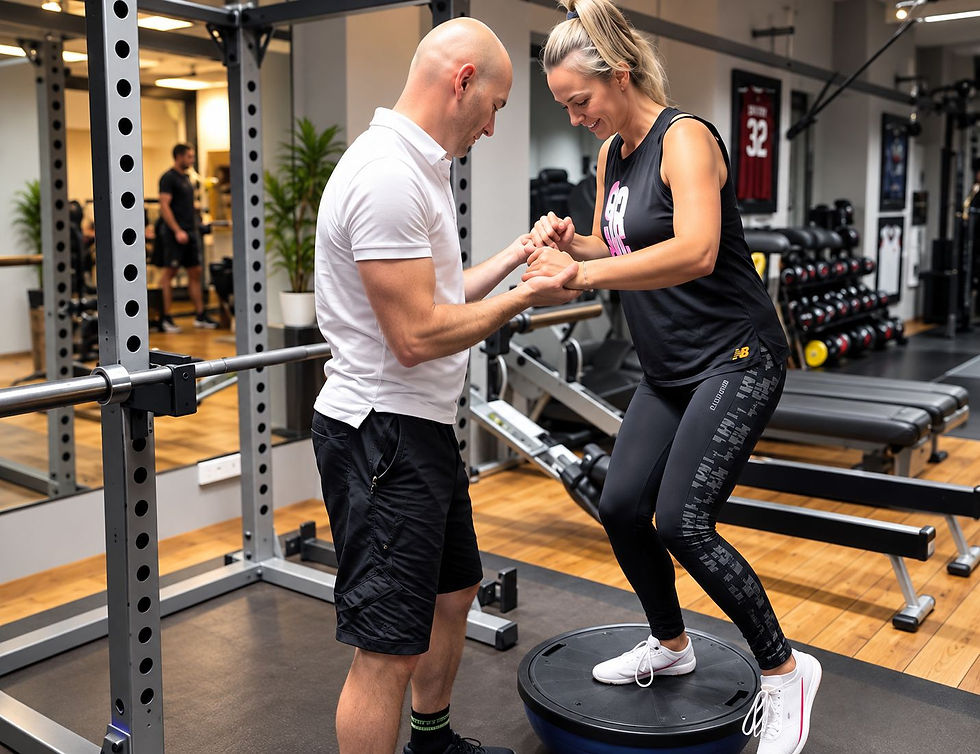
Common injuries and surgeries that benefit from guided strength work
Many people seek support when they are medically stable but not yet moving well. They may have finished early physiotherapy, returned to work, or been cleared for gentle exercise, but still do not feel strong or confident.
Guided movement and strength work can support recovery from many conditions, including:
Shoulder injuries and impingement
Disc injuries and chronic back pain
Knee injuries
Hip and knee replacements
Post-surgical rehabilitation
Each situation needs a different plan. A person with shoulder impingement may need better control through the shoulder blade, rotator cuff and upper back. Someone with a knee injury may need careful work on quadriceps strength, hip control and balance. A person recovering from surgery may need to respect healing timelines while gradually rebuilding capacity.
The common thread is progression. Recovery works best when exercises are challenging enough to create change, but not so aggressive that they flare symptoms.
Movement quality comes first
When pain or surgery changes how the body moves, strength alone is not enough. Adding load to poor mechanics can reinforce the same patterns that caused trouble in the first place.
Movement quality means the body performs a task with control, balance and appropriate effort. It does not mean every movement must look perfect. It means the joints involved can share the work well.
For example, after a knee injury, a person may squat by shifting away from the affected side. After back pain, they may avoid hip movement and hold the spine rigid. After shoulder pain, they may lift the arm by shrugging or arching the back.
Useful movement work often includes:
Slow, controlled repetitions
Reduced ranges before building deeper ranges
Balance and coordination drills
Breath control and relaxed bracing
Simple feedback from mirrors, touch or coaching cues
These details matter because they rebuild trust. When movement feels controlled, the nervous system becomes less guarded. That can make strength training feel safer and more productive.
Stability protects the joint under load
Joint stability is the ability to control position while moving or carrying weight. It does not mean locking a joint still. A stable joint can move, absorb force and respond to change.
For a shoulder, stability may involve the rotator cuff, shoulder blade and upper back working together. For a knee, it may involve the foot, ankle, quadriceps, hamstrings and hip muscles. For the spine, stability often comes from coordinated trunk strength, hip mobility and good load management.
This is especially helpful after joint replacements or knee and hip surgery. Once the early healing milestones are met, stability training can help people walk, climb stairs, get up from chairs and return to hobbies with more confidence.
Good stability training usually starts simple. A supported split squat, a bridge, a step-up, or a banded row may be more useful than a complex exercise performed too soon.
Strength rebuilds capacity for real life
Strength is what allows recovery to hold up outside the clinic or gym. Daily life demands strength, even when it does not look like training. Carrying shopping, lifting a child, walking uphill, gardening, climbing stairs and returning to sport all place load on the body.
After injury, the body often loses strength unevenly. One side may become weaker. Some muscles may switch off or fatigue quickly. Other areas may overwork to compensate.
A safe strength plan usually builds through stages:
Early stage | Middle stage | Later stage |
Restore comfortable range, reduce guarding and practise basic control | Build strength, balance and tolerance to repeated movement | Prepare for heavier loads, faster movement, sport or demanding hobbies |
For someone with chronic back pain, this might begin with hip hinges, carries and trunk control. For a knee injury, it may progress from sit-to-stand work to step-downs, split squats and eventually running drills if appropriate. For shoulder rehab, it may move from banded control to pressing, pulling and overhead work.
Progress should be measured by more than pain. Useful signs include better control, less swelling, improved confidence, better sleep after sessions and the ability to do more over time.
Returning to activity should be gradual and specific
A common mistake is jumping from basic rehab straight back into previous training. The body needs intermediate steps. Walking is not the same as running. A bodyweight squat is not the same as hiking downhill. A light band exercise is not the same as lifting overhead in a busy class.
A gradual return to training should match the activity someone wants to resume. That may include changes in speed, direction, impact, load, range, volume and fatigue.
A sensible plan asks clear questions:
Can the movement be done with good control?
Can it be repeated without symptoms building sharply?
Does the body recover well by the next day?
Is confidence improving, not shrinking?
Has medical guidance been followed where surgery was involved?
Setbacks can happen. A flare-up does not always mean damage, but it is a sign to adjust load, range, recovery or technique. Good coaching helps interpret these signals calmly rather than reacting with fear.

A safe recovery plan respects the whole person
Recovery is physical, but it is also practical and emotional. Pain can affect sleep. Surgery can reduce confidence. Time away from sport or normal routines can feel frustrating. That matters.
A good plan should fit the person in front of it. It should consider medical advice, healing timelines, previous activity level, work demands, stress, sleep and goals. It should also change as the body changes.
The best recovery work is rarely dramatic. It is consistent, measured and specific. One week may focus on range. Another may focus on balance or strength. Over time, these small steps build a body that feels more reliable.
Safe recovery after injury or surgery comes from doing the right work at the right pace. Restore quality first, build stability next, then add strength that prepares the body for real life. That is how movement becomes confident again.



Comments